

Looking to add an exciting new challenge to your outdoor pursuits? The wily coyote may provide a thrilling solution. Liberal hunting seasons allow coyotes to be hunted year-round in most states without a license and can be a fun way to introduce new sportsmen and women to the outdoors. Here are five tips to increase your success chasing wild dogs.
Understand the “Yote”
Coyotes are fascinating animals. With the eyesight of a turkey, nose of a deer, and the intelligence of a domestic dog, they can be a challenging hunt.
They can live alone or in family units and can be very curious. Breeding occurs between January and March and is when coyotes are the most active. On a daily basis they move in early mornings or late afternoons and rest in the middle of the day. Like most mammals, their fur is often thickest in the winter, which presents the optimum time for chasing pelts.
In open country, driving dirt roads on public land can provide leads. Keep an eye on the road and watch for fresh tracks crossing the road. Start your hunt nearby, but don’t stake your hide within eyesight of your vehicle.
There are some who can live without wild things, and some who cannot.
Aldo Leopold
Speak the Language
Coyotes are vocal animals and can be very territorial. A lone howl is a coyote’s way of alerting other coyotes of its whereabouts. It can be used to search for a hunting partner or to establish its territory and can be heard from over a mile away. A lone howl can be very effective at drawing in snooping coyotes and can commonly trigger other coyotes to begin to howl in response – a key in locating potential targets.
The yip-howl is a coyote’s way to promote community and can also be a rallying cry to warn away potential intruders.
Barks are a sign of agitation, mostly at other coyotes that invade their territory. Barks are commonly heard when another coyote is getting too close to a kill or another animal is threatening it.
Ace Your Setup
Like deer hunting, knowing the wind is critical to coyote-hunting success. Setup with the wind in your face, wear camo, and hide in the shadows. When moving to an ambush point, be sure not to skylight yourself on a hill or ridge, and stakeout from an elevated position. If you’re using an electric call or a decoy, place it 100 yards away and upwind of your hide.
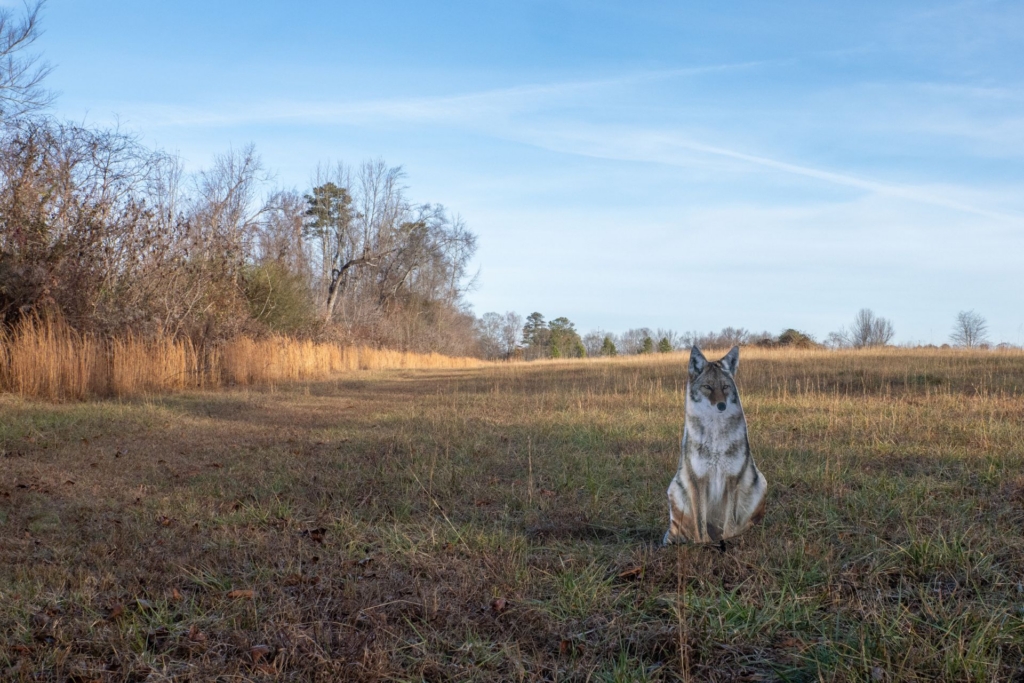
When dogs don’t respond in open country, try your call and decoy setup for 30 to 45 minutes and move another mile to setup again. Don’t set your decoy or call in thick vegetation where dogs can make a stealthy approach. Instead set them close to cover but far enough to where they must expose themselves. Hide electronic calls in hard-to-see places like gullies and thick grass so curious coyotes have to get closer to see the sound source.
Put It All Together
Coyotes have long memories and remember hunters. Show them techniques they haven’t seen before by using a combination of overlapping sounds. Belt some lone howls on a hand-held call and mix in some prey sounds on an electronic call. After that plays for a couple of minutes, make short yips on a handheld call.
For maximum success, pair your calls with a corresponding decoy. The Song Dog Coyote decoy and the Sitting Coyote decoy are extremely versatile when paired with your calling strategy. With a lone howl, territorial instincts will trigger a coyote’s desire to defend its turf. When combined with a pup-in distress call the Song Dog will give a defending female a visual to defend a pup.
In areas where game is abundant, juvenile decoys can be deadly, especially when paired with a fawn bleat from a call. During the spring and summer, the Antelope Fawn and Fawnzy decoys can provide the appearance of an enticing snack.
Be sure to check your state’s hunting regulations, but hunting coyotes can be a great way to extend your hunting season. Mix up your calling and decoy strategies until you find what works. They aren’t called wily for nothing.
